
Digitalization and globalization have created challenges that extend into the area of taxation. One such example is large multinational corporations that take advantage of globalization to structure their operations in a way that allows them to shift profits and secure lower tax rates than those paid by regular taxpayers, who do not have access to the same structural opportunities. These mechanisms, in turn, put pressure on countries to lower their tax rates in an effort to attract investment and capital.
It is within this context that the global minimum tax is being developed to ensure that multinationals pay a minimum level of tax in the jurisdiction where they operate, thereby reducing the incentives to shift profits (GloBE rules[1]). The supplementary global minimum tax that a jurisdiction may impose is up to 15% of revenue.
Overview
- The GloBE rules apply to multinational groups with annual sales of at least 750 million euros[2]. The threshold used is the same as that used in the CBC Report, which makes it easier for tax authorities to identify taxpayers and assess the impact of the GloBE rules in their jurisdiction.
- If a multinational group falls within the scope of these rules, it must calculate its effective tax rate to determine whether it is at, below, or above the 15% minimum.
- When the effective tax rate is less than 15%, the multinational group will be required to pay an additional tax to bring the total tax liability in the jurisdiction up to 15%.
- The resulting additional tax (top-up tax) is collected through three types of mechanisms: QDMTT³, IIR⁴, and UTPR⁵
- GLoBE rules: Global Anti-Base Erosion rules.
- The threshold is met if this amount is exceeded in at least two of the four years preceding the tax period under review.
- Qualified Domestic Minimum Top-up Tax (QDMTT) – Qualified domestic minimum top-up tax.
- Income Inclusion Rule (IIR) – Imposes a supplementary tax on a parent entity with respect to the low taxable income of a constituent entity.
- Undertaxed Payments Rule (UTPR): Denies deductions or requires an equivalent adjustment in a subsidiary jurisdiction to produce an equivalent incremental increase in taxes paid by the MNE Group.
Agreed Rule Set
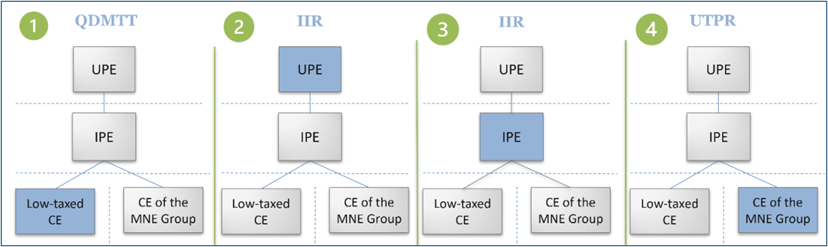
Source: OECD/G20 BASE EROSION AND PROFIT SHIFTING PROJECT
As shown in the diagram above, the low-tax jurisdiction has priority in collecting the additional tax under the QDMTT framework. If the jurisdiction does not have a QDMTT scheme, the jurisdiction where the group’s ultimate parent is located may apply the IIR with respect to the income of the low-tax constituent entity. If the ultimate parent is located in a jurisdiction where the IIR has not been implemented, then the additional tax will be levied on the next entity in the ownership chain domiciled in a jurisdiction with the IIR, following a top-down approach. When the IIR does not apply, the additional tax is collected by jurisdictions that have implemented a UTPR. The amount of tax to be collected under the UTPR in each specific jurisdiction is allocated based on a substance-based allocation criterion.
Comments
We can conclude that the measures proposed by the OECD to address the challenges of the digital economy will, in turn, pose a challenge for tax administrations, consultants, and taxpayers when implementing the GloBE rules. However, reducing tax erosion and leveling the playing field in terms of access to tax rates for regular taxpayers could be a major benefit for countries that implement these rules.